The Evolution of Live Event Wagering Among Toronto Residents Following Updates to National Gambling Statutes
Ellis Wolf · Oct 10, 2026
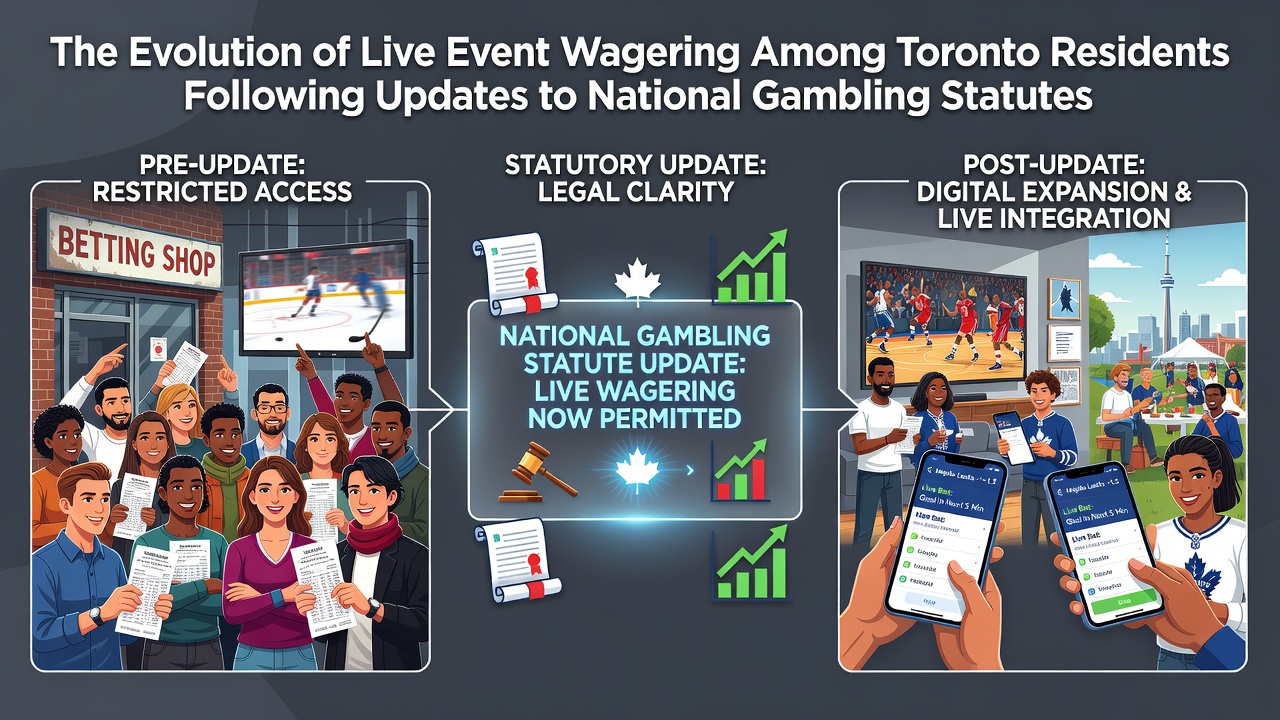
The Evolution of Live Event Wagering Among Toronto Residents Following Updates to National Gambling Statutes
Changes to Canada's federal gambling framework opened pathways for expanded live event wagering options that Toronto residents began to explore more systematically after 2021 amendments took effect. Those updates clarified provisions in the Criminal Code around single-event betting and set the stage for provincial operators to introduce real-time markets on NHL games, NBA contests, and other athletic events without prior restrictions on in-play formats. Toronto's large population of sports enthusiasts responded with increased activity on regulated platforms, and data from subsequent years shows steady growth in live wager volumes tracked through Ontario's licensing system.
Background on National Statute Shifts
Federal legislation passed in the early 2020s removed longstanding barriers that had confined many forms of sports betting to parlay-style products only. Observers note that this adjustment aligned Canadian rules more closely with practices already common in other jurisdictions, allowing provinces like Ontario to establish their own oversight bodies and issue licenses for digital platforms. Toronto residents gained access to apps and websites that offered dynamic odds updates during ongoing matches, a feature that previously operated in legal gray areas or through offshore sites. Regulatory records indicate that by 2023 the number of licensed operators serving Ontario had risen, creating more structured environments for live betting compared with earlier periods.
Adoption Patterns in Toronto
Usage data collected through iGaming Ontario reveals that live event wagering accounted for a growing share of total sports bets placed by Ontario residents, with Toronto contributing a substantial portion due to its concentration of professional sports teams and young adult demographics. People often find that matches involving the Maple Leafs or Raptors generate spikes in real-time bets during key periods such as overtime or late-game rallies. Industry reports compiled in 2025 showed monthly active users on regulated platforms climbing, while average session lengths for in-play markets extended as bettors adjusted to continuous odds fluctuations. External factors like improved mobile connectivity and integration with live broadcast feeds further supported this shift among city residents.
Market Data and Participation Trends
Figures released by provincial regulators through mid-2026 document a measurable rise in live wagering handle, particularly during fall and winter sports seasons. According to statistics compiled by iGaming Ontario, in-play bets represented over 40 percent of sports wagering activity in the province by the third quarter of 2026. Toronto-specific breakdowns, though not always separated publicly, align with broader Ontario patterns where residents favor basketball and hockey markets that lend themselves to frequent in-game adjustments. Researchers at Canadian academic institutions have begun examining these datasets to track correlations between statute updates and changes in betting frequency, noting that participation rates stabilized after initial surges.
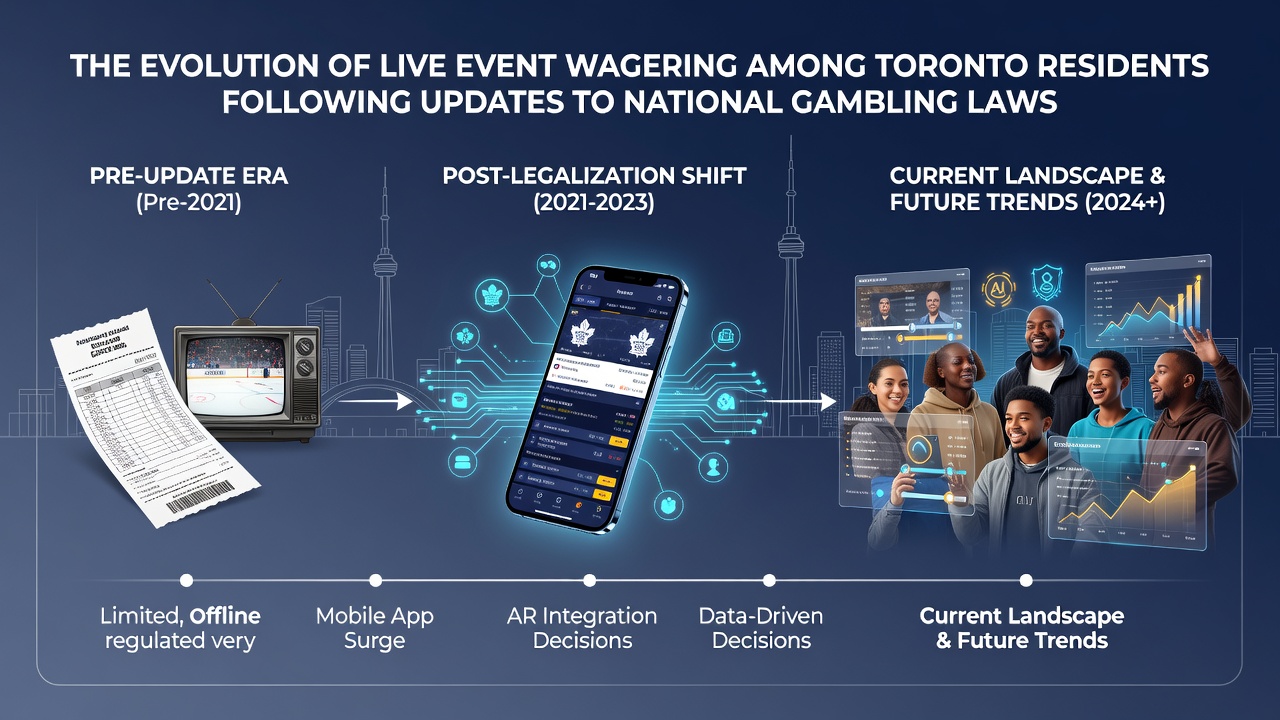
Technological and Regulatory Influences
Platform operators responded to the updated statutes by rolling out features such as cash-out options and micro-bets that update every few minutes during events. These tools became widely available to Toronto users once licensing requirements emphasized responsible gambling controls alongside expanded product offerings. Data from 2024 through October 2026 indicates that session times on live markets lengthened compared with pre-update periods, while the proportion of bets placed via mobile devices exceeded desktop usage by wide margins. Provincial rules also introduced mandatory age verification and deposit limits that shaped how residents interacted with real-time wagering interfaces, creating a more monitored environment than existed before national changes.
Comparative Context from Other Regions
Studies conducted outside Canada provide additional perspective on how similar regulatory transitions affected live betting behaviors. Research published by the Australian Institute of Criminology examined post-legalization patterns in several states and found parallel increases in in-play participation once clear licensing frameworks replaced earlier prohibitions. Those findings suggest that Toronto's trajectory fits within broader international experiences where statute modernization coincides with higher volumes of real-time wagers, though local factors such as team performance and venue accessibility continue to influence specific outcomes. Canadian analysts have referenced these cross-border comparisons when evaluating ongoing adjustments to Ontario's regulatory approach.
Conclusion
Live event wagering among Toronto residents evolved considerably after national gambling statutes were revised, with provincial implementation producing measurable growth in regulated in-play activity through 2026. Participation data, platform feature expansions, and comparative international research all point to a transition toward more structured and accessible real-time betting options. Continued monitoring by regulators and researchers will determine how these patterns develop alongside further technological and policy refinements.