Weather Patterns and Venue Factors Shaping Prediction Models for Ontario Athletic Events on Regulated Digital Platforms
Viktor Richter · Sep 12, 2026
Weather Patterns and Venue Factors Shaping Prediction Models for Ontario Athletic Events on Regulated Digital Platforms
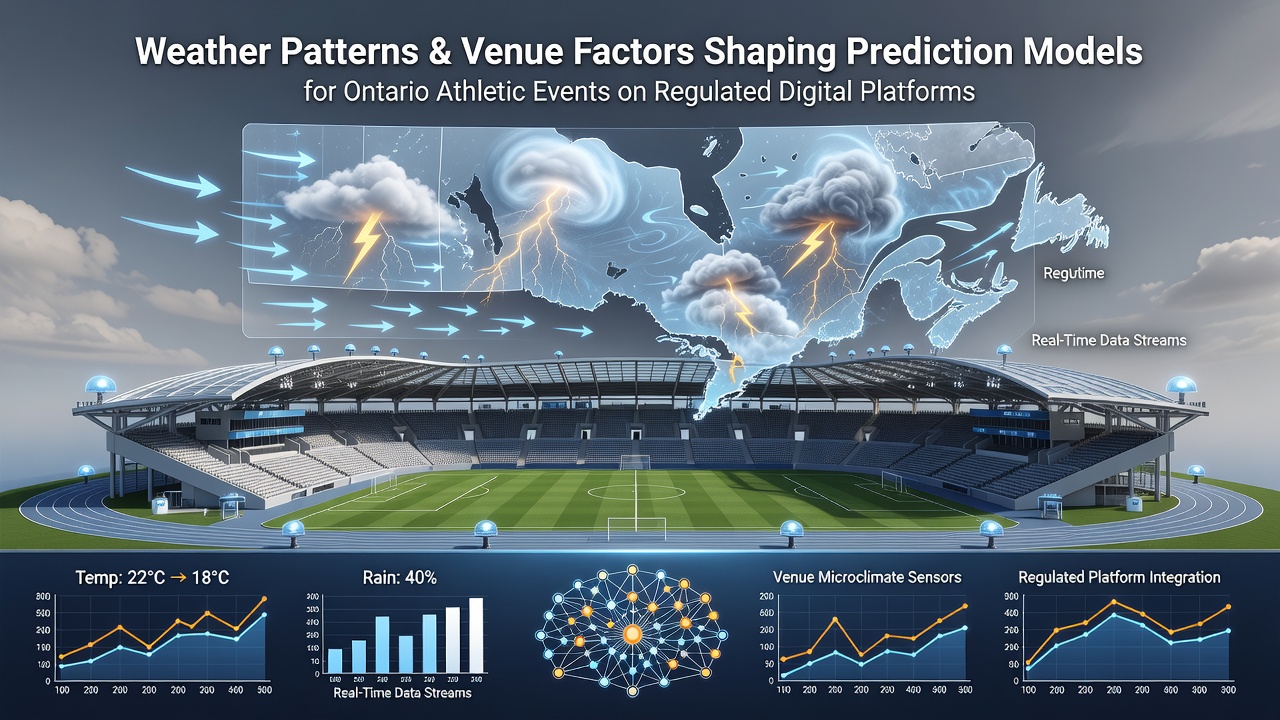
Ontario athletic events unfold across a landscape where weather patterns and venue characteristics feed directly into prediction models used on regulated digital platforms, and these elements combine with historical performance data to adjust probabilities for outcomes in sports such as soccer, football, and baseball. Data from Environment and Climate Change Canada shows that temperature fluctuations, precipitation levels, and wind speeds vary sharply between spring, summer, and fall seasons, while venues like Toronto's Rogers Centre with its retractable roof or Ottawa's outdoor fields introduce additional variables that algorithms must account for when generating forecasts.
Weather Influences on Athletic Performance Data
Ontario experiences distinct seasonal shifts that affect outdoor competitions, with autumn months bringing cooler temperatures and increased rainfall that can slow field conditions and alter player movement patterns. In September 2026, forecasters anticipate continued monitoring of these trends as digital platforms update their models to reflect late-season games where rain accumulation has historically reduced scoring rates in soccer matches by measurable percentages according to league statistics. Researchers at Canadian universities have compiled datasets indicating that wind speeds above 20 kilometers per hour correlate with higher error rates in passing plays during football events, prompting platforms to integrate real-time meteorological feeds into their algorithms.
Platforms operating under Alcohol and Gaming Commission of Ontario oversight incorporate these weather inputs alongside player statistics and team records, creating layered models that adjust expected values for events at exposed venues versus those with protective structures. Studies from institutions in North America reveal that humidity levels above 70 percent often extend game durations in baseball by increasing fatigue among pitchers and fielders, and this information flows into prediction systems that refine betting lines throughout the day of competition.
Venue Characteristics and Their Integration
Venues across Ontario range from enclosed arenas suited for year-round hockey to open-air stadiums that expose events to environmental variables, and each site carries unique attributes such as field surface type, altitude, and lighting that models must quantify. Toronto's retractable-roof facilities allow operators to close structures during heavy precipitation, yet when roofs remain open the impact on play mirrors that of fully outdoor sites in cities like Hamilton or London. Data collected from these locations feeds into machine learning frameworks where variables like grass length and drainage efficiency modify projected game totals.

Prediction models on regulated platforms draw from venue-specific archives maintained by sports governing bodies, combining them with weather forecasts to simulate scenarios for upcoming matches. One analysis of Ontario soccer venues demonstrated that artificial turf surfaces retain heat differently than natural grass during warm September periods, leading to adjustments in expected player endurance metrics. Platforms licensed through provincial channels use these combined inputs to generate dynamic odds that reflect both atmospheric and physical site conditions without relying on static assumptions.
Model Development and Data Sources
Developers of prediction systems source information from multiple channels including government weather services and venue maintenance logs, then apply statistical techniques to weigh each factor's contribution to outcomes. Academic research conducted at universities in Ontario and neighboring regions has produced frameworks where precipitation probability interacts with venue drainage ratings to estimate scoring adjustments, while wind direction data refines passing accuracy projections for football contests. These models undergo regular calibration as new event results enter the datasets, particularly around periods like September when transitional weather patterns test the robustness of existing algorithms.
Regulated digital platforms in Ontario must comply with standards set by the Alcohol and Gaming Commission of Ontario, which requires transparent methodologies for incorporating external variables such as weather and venue details into consumer-facing predictions. Reports from industry organizations in Canada and Australia highlight how cross-referencing local meteorological records with venue blueprints improves model accuracy over time, allowing platforms to present updated forecasts that account for sudden changes like afternoon thunderstorms common in the region.
Conclusion
Weather patterns and venue factors continue to serve as core components within prediction models for Ontario athletic events on regulated digital platforms, where data integration from meteorological agencies and site operators supports ongoing refinement of forecasts. As seasons progress into September 2026 and beyond, these elements remain central to maintaining alignment between model outputs and actual event conditions across teh province's diverse sporting venues.